Bowls & feeding
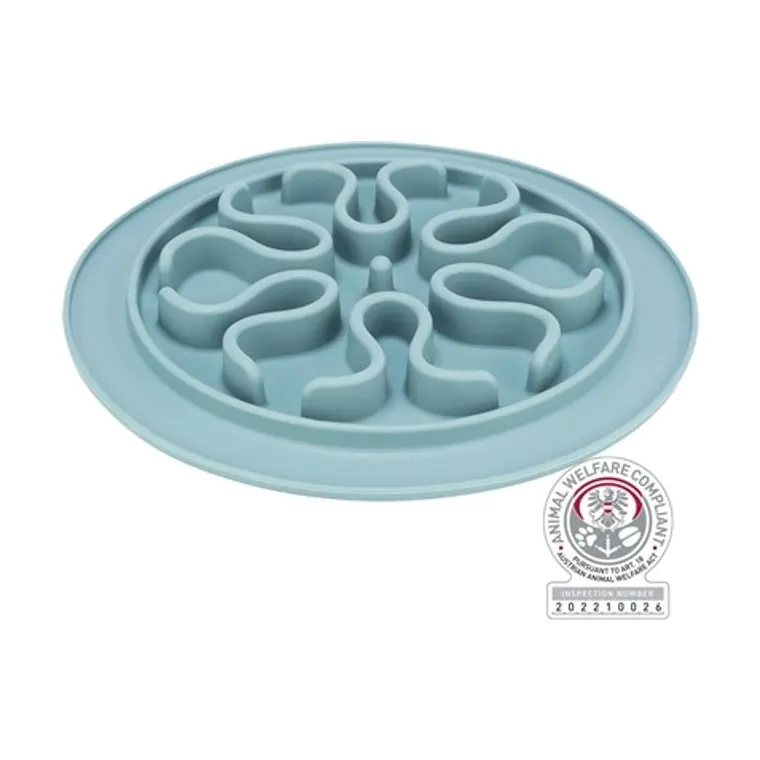
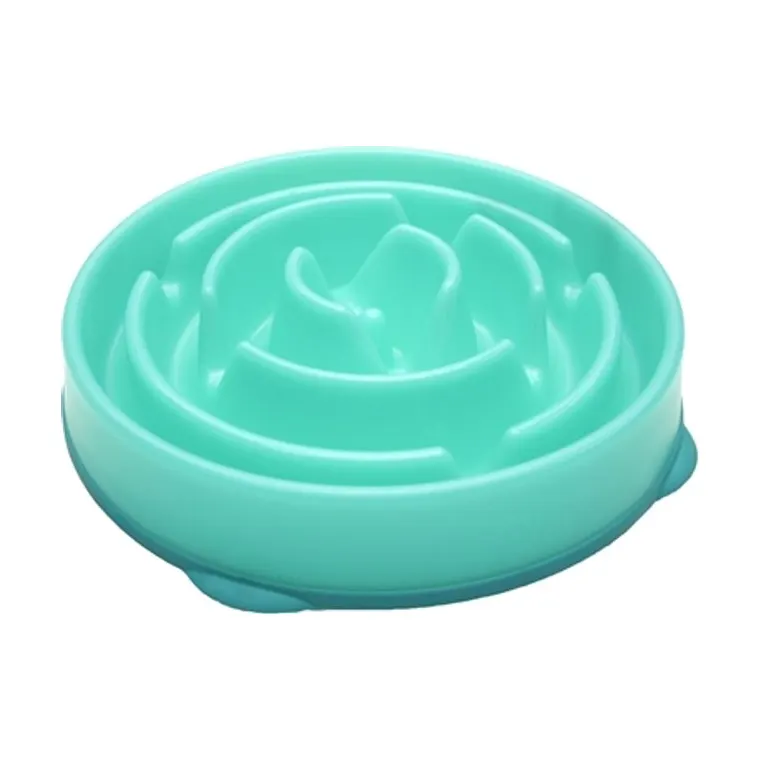
Slo-Bowl Drop slow feeder bowl, teal light blue/white, 29 x 29 x 7 cm
In stock · 1 to 2 working days (NL) or 2 to 7 (EU)Buy 2: 5% off · 3 or more: 10% off€ 26.25
11 August 2026 · Explainer
Pet-weight surveys keep delivering grim numbers, and the newest one, released in March 2026, found that most owners' slim-down attempts fail. Here is what peer-reviewed research actually shows about slow feeders, snuffle mats and food puzzles, and the old raised-bowl advice that turned out to be backwards.
Walk any pet aisle in Europe and the ordinary food bowl now shares shelf space with maze bowls, snuffle mats and puzzle feeders. The trend has a serious backdrop. In the last veterinary-assessed survey by the US Association for Pet Obesity Prevention, in 2022, 59% of dogs and 61% of cats were classified as overweight or having obesity, and a 2025 study in Preventive Veterinary Medicine that analysed body-condition records of nearly 4.9 million US dogs and 1.3 million cats found the problem peaks in mid-life, with roughly 63% of mature dogs and 61 to 66% of adult and mature cats above ideal condition. The UK tells the same story: veterinary professionals surveyed for PDSA's 2023 PAW Report estimated that 46% of dogs are overweight or obese, and PDSA notes published studies putting the figure as high as 65%. APOP's newest owner survey, released in March 2026, adds the sobering part: among owners who had tried to help their pet lose weight, only about one in four dog owners and fewer than one in five cat owners said their pet reached and kept a healthy body condition. The problem is real and the fixes mostly fail: the veterinary industry takes it seriously enough that in December 2025 the first cat was dosed in a clinical trial of a GLP-1 (Ozempic-class) implant for pets, a therapy that is investigational, not for sale. Against that backdrop, a bowl that slows a dog down or makes a cat work for its dinner deserves a proper look at the evidence.
The everyday risks of speed-eating are mundane but unpleasant: the American Kennel Club lists choking and vomiting among the direct consequences of a dog bolting its food. The serious one is gastric dilatation-volvulus, GDV or bloat, in which the stomach fills with gas and can twist on itself. It is a surgical emergency seen most in large, deep-chested dogs. VCA's veterinary guidance names Great Danes, Saint Bernards, setters and Dobermanns among the predisposed breeds while noting that any dog can bloat: and the UK charity PDSA puts the stakes bluntly: roughly 15% of affected dogs do not survive even with treatment. Eating speed shows up in the risk research. A Purdue University prospective study that followed 1,637 large and giant-breed dogs found that the factors significantly associated with increased GDV risk were increasing age, having a first-degree relative with a history of GDV, a faster speed of eating, and: more on this below: a raised feeding bowl. A 2017 knowledge summary in the journal Veterinary Evidence rated the eating-speed evidence as mixed across studies but reached a practical conclusion: slowing a dog's meals will not increase its risk of GDV and may possibly reduce it. For a fast-eating dog of an at-risk breed, that asymmetry is the whole argument for trying.
Elevated feeders are a good case study in why this article cites its sources. For years, raised bowls were recommended to prevent bloat in big dogs, on the plausible theory that a better eating posture meant less swallowed air. The Purdue cohort study tested the theory and found the opposite direction: a raised feeding bowl was associated with more GDV, not less, and the researchers attributed approximately 20% of GDV cases among large-breed dogs and 52% among giant-breed dogs to eating from a raised bowl. An association in an observational study is not proof of causation: but a 2017 review in Veterinary Evidence searched for any study showing raised feeders reduce GDV risk, found none, and concluded that the safest option for at-risk dogs is a feeder on the floor. PDSA now gives owners exactly that advice, noting that the previous raised-bowl recommendation "has now been shown to increase the risk". The practical translation for owners of deep-chested breeds: feed from the floor, split the daily ration into several smaller meals, keep things calm around mealtimes, and treat any product-listing claim about bloat prevention with a large grain of salt: including for the slow feeders discussed next.
The direct test of the product category comes from Harper Adams University, published in Veterinary Evidence in 2016. Ten pet dogs were fed the same ration from a standard bowl and from a go-slow feeder, and the maze bowl worked: both the time taken to finish the ration and the rate of consumption in grams per minute changed significantly (P = 0.006 and P = 0.002 respectively). Dogs did get faster once they had nine days of practice on the puzzle bowl, but experienced dogs still ate more slowly from it than from a normal bowl, so the effect survives the learning curve. The researchers added a caveat worth repeating next to any slow-feeder product: they found no evidence that the dogs wanted their eating slowed down. A slow feeder is a management tool for the owner, not a treat for the dog: the enrichment case rests on the foraging research in the next section. In practice the choice is not either-or. PDSA's advice for a dog that inhales its food is a slow-feeding bowl or scatter feeding, spreading the meal so it must be picked up piece by piece; a wipeable feeding mat keeps the scatter method off the kitchen floor.
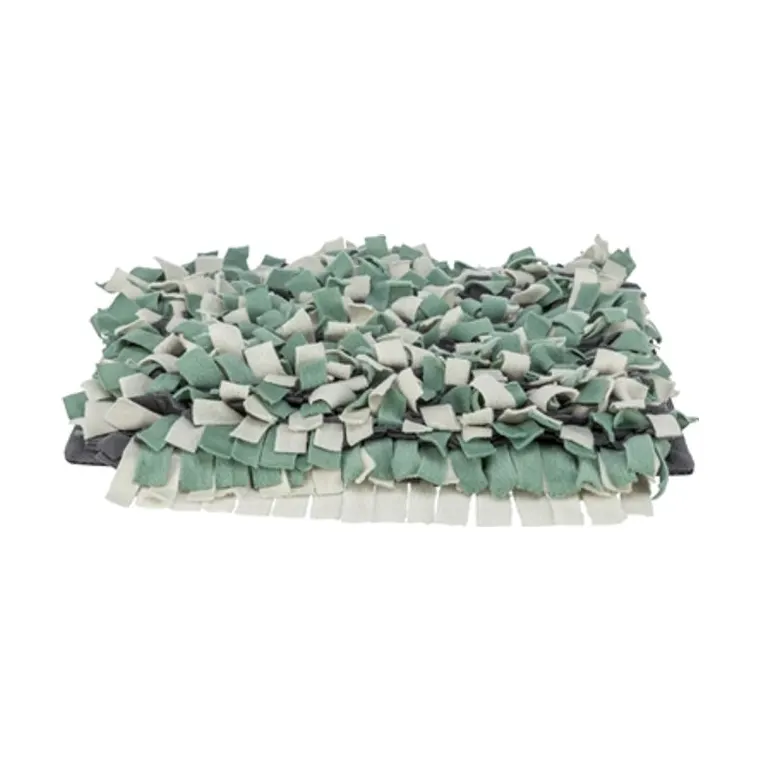
The honest reading of the dog-enrichment literature is enthusiastic but precise. In a survey of 1,750 dog owners published in Veterinary Record under the memorable title "Bowls are boring", food-dispensing toys, chews and activity feeders were the most popular alternatives to bowl feeding, mental stimulation was the most commonly perceived benefit, and some methods were associated with owners perceiving less hunger and begging: perception data, worth exactly that. The measured effects point the same way. A 2008 study in Applied Animal Behaviour Science found that kennelled dogs given food-dispensing toys were more active and barked less. A 2024 study in Scientific Reports offered 38 pet dogs a snuffle mat next to an identical pile of freely available food: 30 of the 38 chose to work the mat at least once even though the free food sat beside it: a willingness researchers call contrafreeloading: though only one dog outright preferred working for it, and dogs with higher body-condition scores went to the mat first more often. And a 2019 experiment in Applied Animal Behaviour Science found that two weeks of daily nosework, finding hidden food by smell, made dogs approach an ambiguous test situation faster than a control group trained in heelwork: the standard measure of an optimistic judgement bias. Working nose-first for food is something most dogs will opt into and seem better off for. That is a solid, unhyped case for a snuffle mat or puzzle toy as a routine rather than a gimmick.
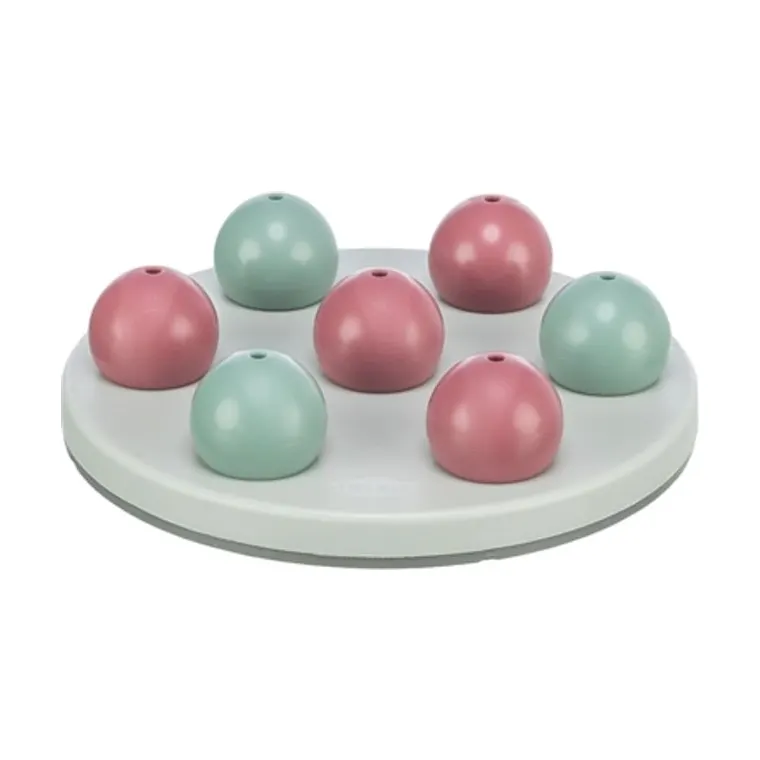
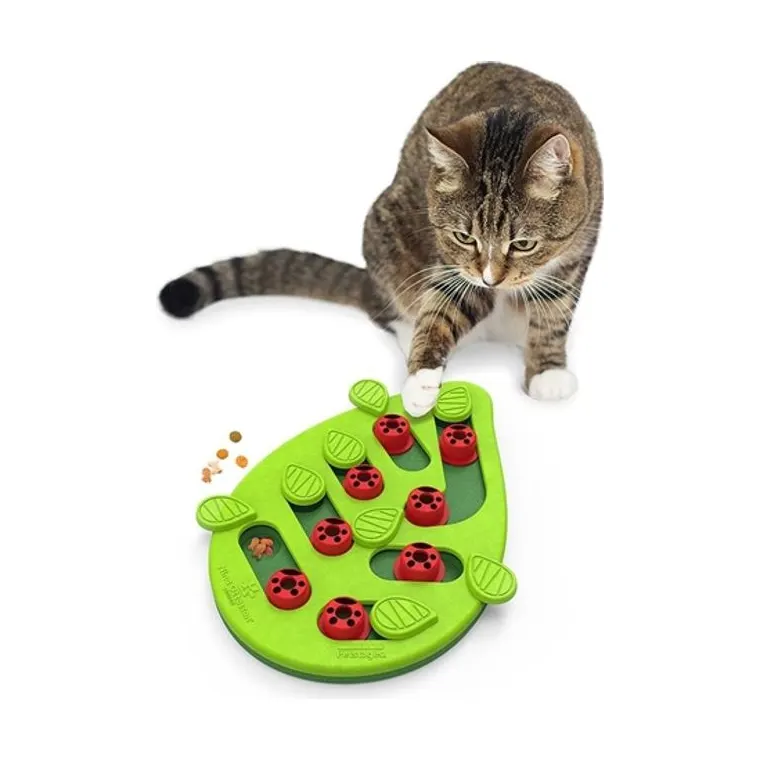
For cats the professional guidance is unambiguous. The American Association of Feline Practitioners' 2018 consensus statement on feline feeding programs recommends that a cat's daily food allowance "should be split into multiple small meals and fed throughout the 24 h period, using puzzle feeders when possible", and warns that the typical household routine of one or two large meals at a single feeding station can lead to inactivity and even distress, often resulting in overconsumption and obesity: a risk the statement notes is raised by an indoor lifestyle in general. The clinical literature behind that advice includes a 2016 review of food puzzles in the Journal of Feline Medicine and Surgery whose case reports describe an obese cat that lost 32% of its body weight over 18 months after stationary food puzzles were introduced, and cats whose food-related frustration, redirected aggression and meowing for food eased. Case series are not controlled trials, but they point consistently in one direction. The striking figure is how few cats ever get the chance: a 2020 survey of 3,192 cat owners in the same journal found that 30% used food puzzles, 18% had tried and stopped, and more than half had never offered one at all. Start easier than you think you need to: a puzzle the cat can see and hear the food in, filled from the daily ration rather than on top of it: and count slower, busier eating as the win it is. This article is general guidance, not veterinary advice.
Yes. In a controlled comparison published in Veterinary Evidence in 2016, dogs fed the same ration from a go-slow feeder took significantly longer to finish and ate significantly fewer grams per minute than from a standard bowl, and although they got quicker after nine days of practice, experienced dogs still ate more slowly than from a normal bowl. The same study found no evidence the dogs wanted to be slowed down: a slow feeder manages a habit, while sniffing, foraging and play provide the fun.
That claim goes beyond the evidence. A large Purdue University study identified faster eating as one of the factors associated with increased GDV risk in large and giant breeds, and a 2017 evidence review concluded that slowing meals will not increase the risk and may possibly reduce it: but no study has demonstrated that slow feeders prevent GDV. For deep-chested, at-risk breeds: feed from a bowl on the floor rather than a raised stand, split food into several smaller meals, and treat a suddenly swollen belly or unproductive retching as an immediate emergency vet visit.
The American Association of Feline Practitioners recommends splitting a cat's daily ration into multiple small meals using puzzle feeders where possible, and published case reports describe weight loss and fewer food-frustration behaviours after introducing them. Yet in a survey of 3,192 cat owners, more than half had never tried one. Start with an easy puzzle the cat can see and hear the food in, fill it from the normal daily ration rather than adding extra, and expect a learning curve of days, not minutes.