Petgear
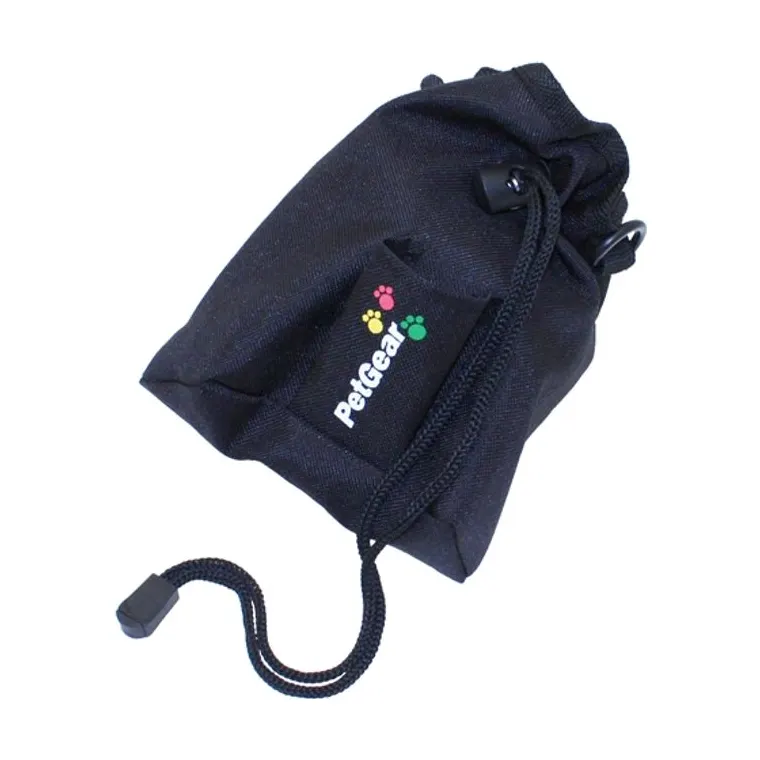
PetGear treat pouch, 16 x 9 x 9 cm
In stock · 1 to 2 working days (NL) or 2 to 7 (EU)Buy 2: 5% off · 3 or more: 10% off€ 8.49
30 July 2026 · Research
Hungarian researchers watched 38 dogs, 22 cats and 19 toddlers while a familiar caregiver hunted for a hidden sponge. Most dogs and children stepped in; most cats simply watched. Here is what that does, and does not, tell you about your pet.
In February 2026 the journal Animal Behaviour published a study whose title reads like a settled argument: "Dogs' behaviour is more similar to that of children than to that of cats in a prosocial problem situation." The work came from Eötvös Loránd University in Budapest and the HUN-REN-ELTE Comparative Ethology Research Group, with Melitta Csepregi as first author and Márta Gácsi as senior author. The design was deliberately domestic. A familiar person, a parent for the children and the owner for the pets, hid a dishwashing sponge in plain sight while the subject watched, then searched for it while repeating "I can't find it. What should I do?" Nobody was asked for help, nothing was rewarded, and none of the animals had been trained for the task. Three trials made the sponge progressively easier to reach: first unreachable and covered, then visible but out of reach, then fully accessible. The only question was whether the subject would volunteer.
The groups were small, as they usually are in comparative ethology: 38 untrained pet dogs, 22 cats and 19 children aged between 16 and 24 months. According to the researchers' summary of the results, more than 75% of the dogs and the children either indicated where the sponge was or retrieved it and brought it over, despite being untrained, unrewarded and looking for an object that meant nothing to them. The cats rarely did either. They were not oblivious, which is the detail worth holding onto: the reporting on the study is consistent that cats attended to the situation, tracked the searching human, and then stayed where they were. The toddlers' performance matters more than it appears, because it was the check on the method rather than the headline. As Csepregi explained, children were already known to help at this age, so their performing in line with earlier studies "confirmed that our method and the experimental setup were suitable for measuring prosocial behavior."
The result that complicates the headline came in a further trial, where the team swapped the sponge for something the cat actually wanted, a favourite treat or toy. Cat behaviour changed: they acted more often once the hidden item was personally relevant. That shifts the finding from an absence of ability to a difference in motivation. A sponge is worth nothing to a cat, so a human failing to find one is not a problem the cat has. Senior author Márta Gácsi drew the wider conclusion carefully, noting the results suggest "domestication, sharing our home, and forming close bonds are not sufficient to produce spontaneous, human-like helping behavior." The explanation the team offers points at history rather than character: dogs descend from a cooperative social ancestry, while cats came from solitary ancestors and largely domesticated themselves rather than being selected for cooperation with people. The genetic record fits that picture, with the Max Planck Institute of Geoanthropology describing the modern domestic cat as primarily a descendant of Felis silvestris lybica, the African or Near Eastern wildcat.
It would be easy to file this under proof that cats do not care about us, and the wider literature does not support that reading. Using the Secure Base Test borrowed from human infant research, Kristyn Vitale, Alexandra Behnke and Monique Udell reported in Current Biology in 2019 that cats display distinct attachment styles toward human caregivers, with about 65% of cats and kittens classified as securely attached, a proportion that closely mirrors the figure reported for human infants. An earlier study from the same group, published in Behavioural Processes in 2017, gave cats a choice between human social interaction, food, toys and scent, and found that social interaction with humans was the most-preferred category for the majority of cats, in both pet and shelter populations, with food second. Set those alongside the sample sizes here, 38 dogs and 22 cats in a single household task built around a single irrelevant object, and the honest summary is narrower than the headlines. Dogs volunteer help spontaneously and cats mostly do not. That is a real finding about helping behaviour. It is not a finding about affection.
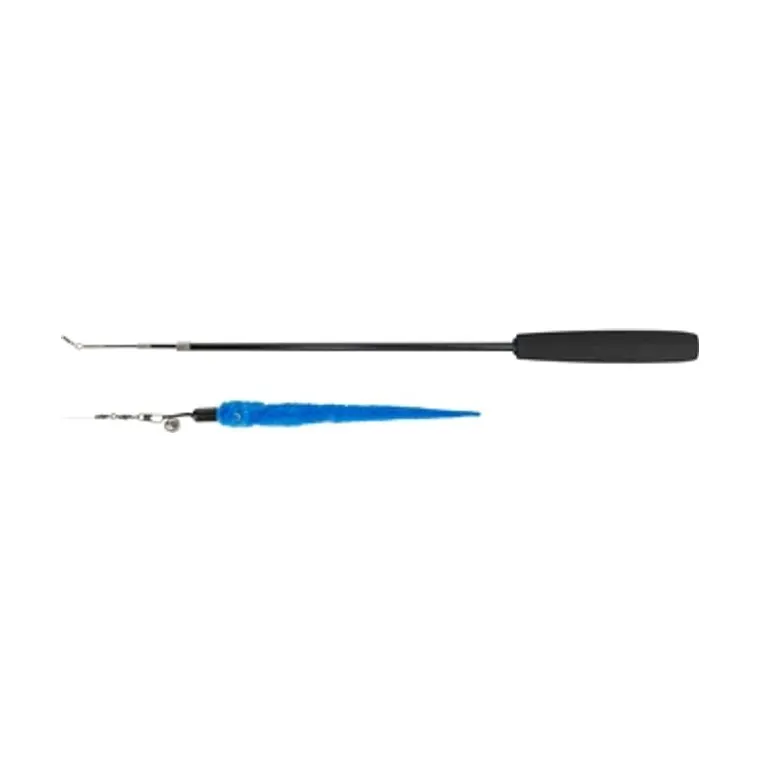
The practical translation is not new advice, but this study sharpens it. With a dog, the social channel is open by default, which is why reward-based training works so readily and why timing beats generosity: the reward has to arrive within a second or two of the behaviour you wanted, and a pouch on your hip is the difference between rewarding the moment and rewarding whatever the dog did next. With a cat, assume nothing is free. If you want a cat to engage, make what is on offer worth having in the cat's own economy, which usually means food that has to be worked for, or a preferred toy moved like prey rather than left lying about. That is also the answer to the most common complaint about cat toys, which is that the cat ignored them: a wand a human actually moves will beat a toy on the floor every time, because the movement is the point.
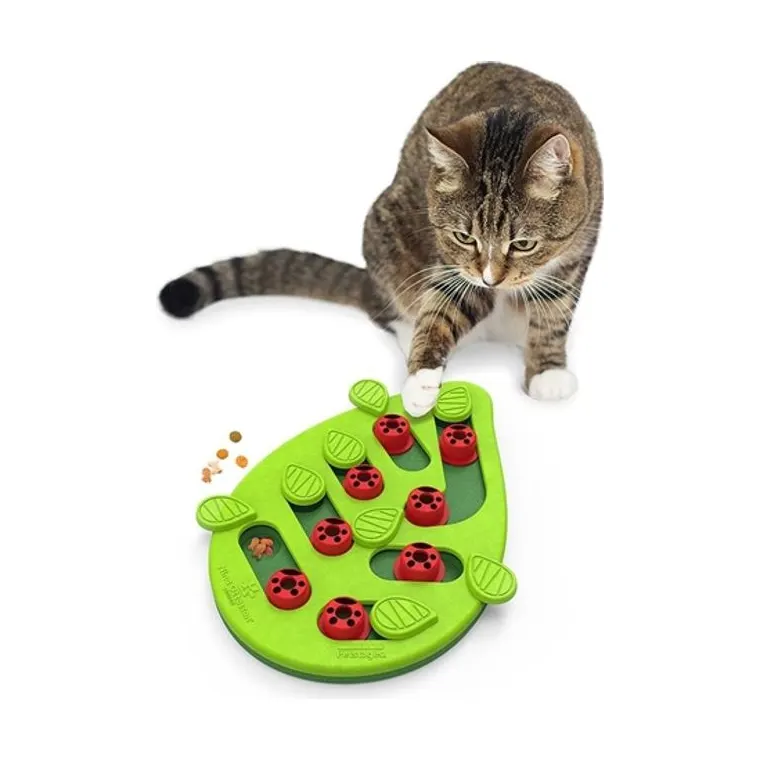
If cats look untrainable, the reason is usually that nobody has tried systematically with something the cat values. In a 2017 study in the journal Animals, Lori Kogan, Cheryl Kolus and Regina Schoenfeld-Tacher trained 100 shelter cats in fifteen five-minute sessions across two weeks to perform four cued behaviours, and the results were uneven but unambiguous: 79% mastered targeting, touching a target with the nose, 60% mastered spinning, 31% mastered a high-five and 27% mastered sitting on cue. These were stressed animals in a shelter, learning inside roughly an hour and a quarter of total training time. The same logic scales down to an ordinary living room. Turn part of the daily ration into work with a puzzle feeder, keep sessions short and the food high-value, and stop while the cat is still interested. A cat that will not fetch your sponge will still solve a rotating feeder for dinner, and both facts are telling you the same thing about what moves it.
Rarely, at least in the situation tested. In a 2026 study in Animal Behaviour, more than 75% of dogs and toddlers either indicated or retrieved an object a familiar caregiver was searching for, while cats mostly watched without acting. Cats did act more often when the hidden item was something they wanted themselves, which points to a difference in motivation rather than in ability.
No, and separate research argues otherwise. Work published in Current Biology in 2019 using the Secure Base Test found that about 65% of cats and kittens were securely attached to their caregivers, close to the proportion reported for human infants, and a 2017 choice test found most cats preferred human social interaction over food, toys and scent. Spontaneous helping and attachment are different things.
Up to a point, if the reward is worth it to the cat. In a study of 100 shelter cats given fifteen five-minute sessions over two weeks, 79% learned to touch a target on cue and 60% learned to spin, while sitting on cue proved hardest at 27%. Short sessions with high-value food work better than long ones, and stopping while the cat is still keen matters more than finishing the plan.