The new-puppy walking kit: what you need (and what can wait)
Puppy shops love selling you everything at once. You don't need everything — you need the right four things before the first walk, sized to grow. Here's the honest list, plus what genuinely can wait.
At a glance
| Product | Best for | Price | Warranty |
|---|---|---|---|
| Outdoor Dog Harness (Small & Medium Dogs) | Real supplier stock — ships in 8–15 days | € 12.95 | 2 years |
| Dog-Walking Pouch with Poop-Bag Holder | Real supplier stock — ships in 8–15 days | € 12.95 | 2 years |
| Treat-Dispensing Puzzle Chew Toy | Real supplier stock — ships in 8–15 days | € 12.95 | 2 years |
| Reflective Hands-Free Running Leash Set | Real supplier stock — ships in 8–15 days | € 12.95 | 2 years |
Before the first walk: the essential four
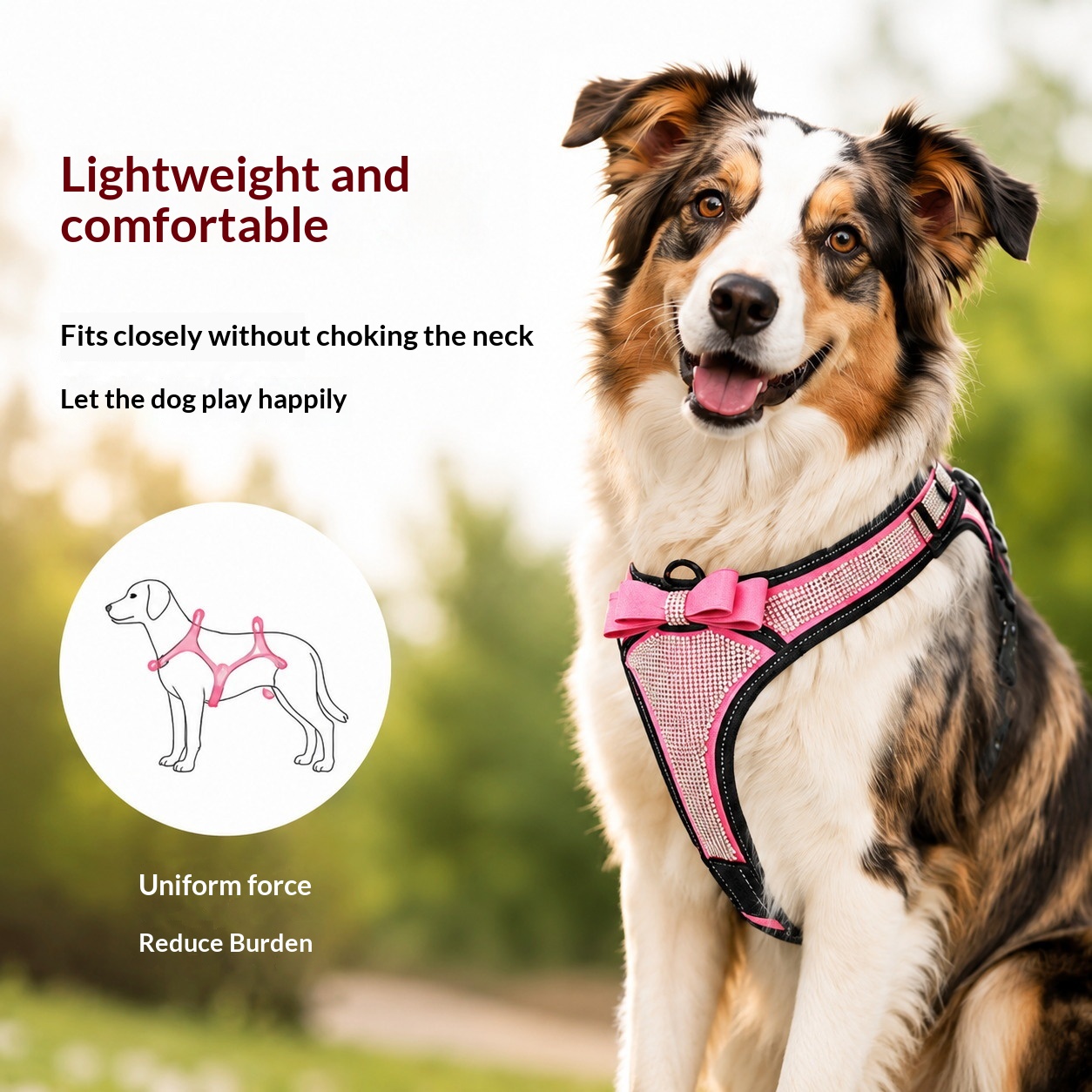
A puppy's first weeks outside shape years of walking behaviour, and the gear list is shorter than the pet store suggests: a well-fitted harness (puppies pull, and their throats are still developing — skip collar-walking entirely at this age), a fixed-length lead of around 1.5–2 metres, a treat pouch, and poop bags. That's the kit. Everything else — coats, boots, fancy long-lines — can wait until you know the dog you're raising. Spend the saved money on the things that shape behaviour: high-value treats for the pouch and time, which is free. The Outdoor Dog Harness adjusts at neck and chest, so one size survives a growth spurt or two.
Why a treat pouch beats a coat pocket
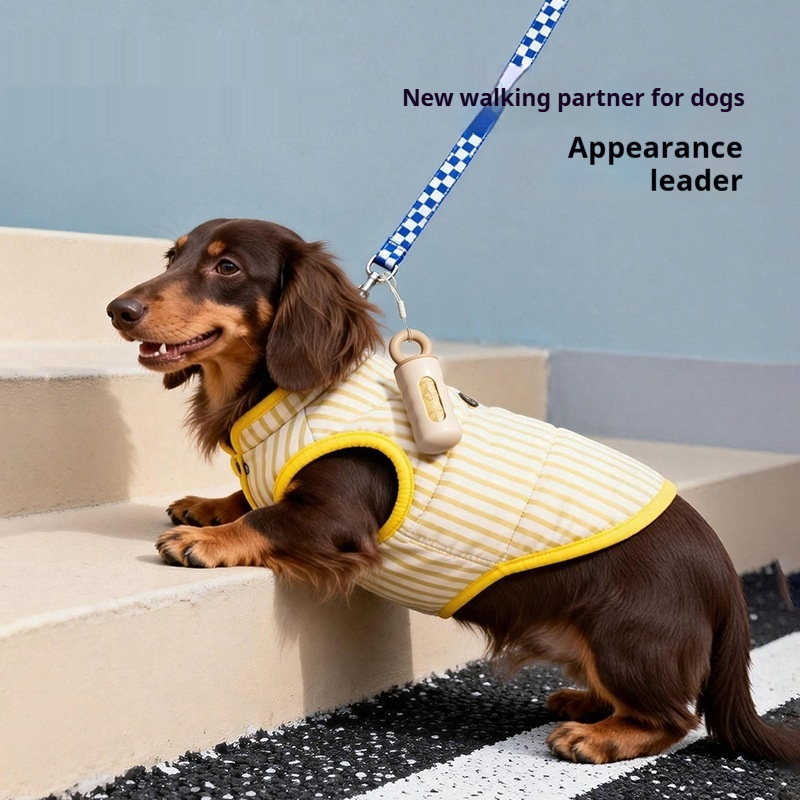
Reward timing is everything in puppy training: the treat has to arrive within a second or two of the behaviour, or the puppy connects it to whatever happened next. Fishing through a coat pocket costs you exactly that window. A pouch on your hip puts the reward at your fingertips, every single time — which is why trainers wear one even for experienced dogs. A pouch with a poop-bag slot, like the Dog-Walking Pouch, folds the second essential into the same piece of kit, so leaving the house is grab-and-go. Load it with something the puppy only gets on walks; novelty keeps the recall sharp.
Chewing is not optional — channel it
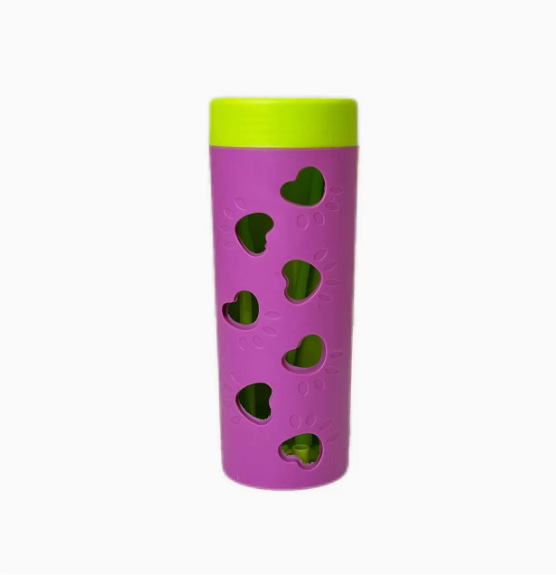
Puppies chew because teething hurts and because exploring the world happens mouth-first. You can't stop it; you can only decide what gets chewed. A treat-dispensing chew toy does double duty: it survives puppy teeth, and working food out of it tires the brain — ten minutes of puzzle-chewing calms a puppy more than half an hour of zoomies. Rotate two or three chew items so none goes stale, and hand one over proactively whenever the puppy settles: you're teaching 'quiet time comes with something good', which pays off for the rest of the dog's life.
What can wait (and what to skip)
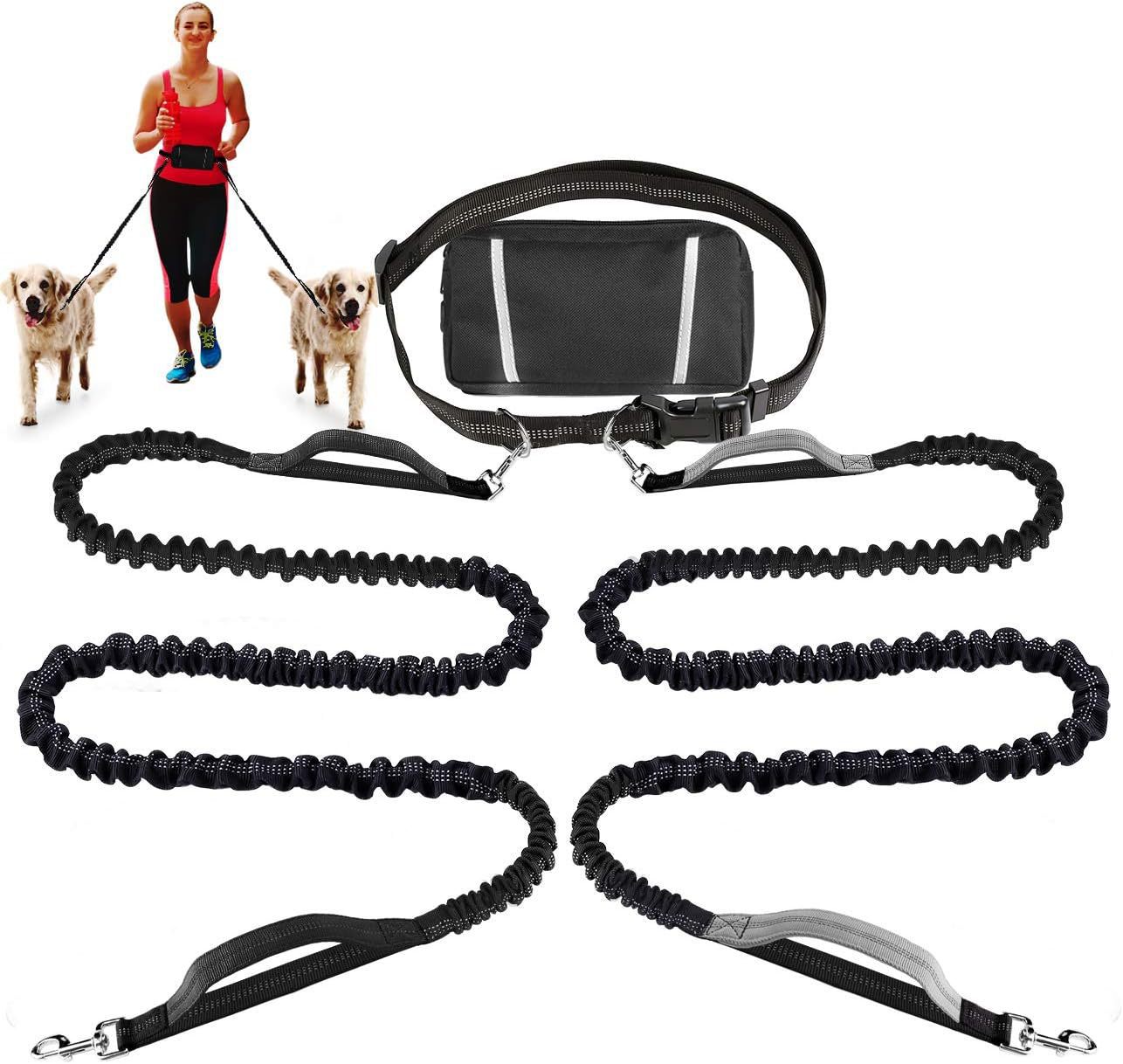
Wait on: a running leash (joints need to mature before a dog runs distance — ask your vet, typically past 12–18 months depending on breed), a car harness setup for road trips, and stairs or ramps for furniture access. Buy those when the need is real; the Reflective Running Leash Set will still be there when your dog is ready to jog. Skip: retractable leads for training (they teach that pulling extends the range — the opposite lesson), anything marketed as 'anti-bark', and electronics of any kind. A puppy needs consistency and rewards, not gadgets. This is general guidance, not veterinary advice — your vet knows your puppy's breed, joints and vaccination schedule best.
FAQ
Should a puppy wear a collar or a harness?
Walk on a harness: puppies pull and their throats are still developing. Use a light collar only to carry the ID tag. Fit the harness with two fingers of slack and re-check every few weeks — puppies grow through settings fast.
When can my puppy go for a run with me?
Not before the growth plates close — typically somewhere past 12–18 months depending on breed and size. Running too early risks joint damage. Ask your vet before you start, and build distance slowly.
Are retractable leads good for puppies?
For training, no. They reward pulling with extra range — the exact opposite of loose-leash walking — and give you little control in traffic. A fixed 1.5–2 m lead teaches better habits; add a long-line in the park for recall practice.
How do I stop my puppy chewing everything?
You don't stop it — you channel it. Keep two or three durable chew toys in rotation, hand one over whenever the puppy settles, and put tempting items out of reach. Teething puppies need to chew; the only question is on what.