Hunter
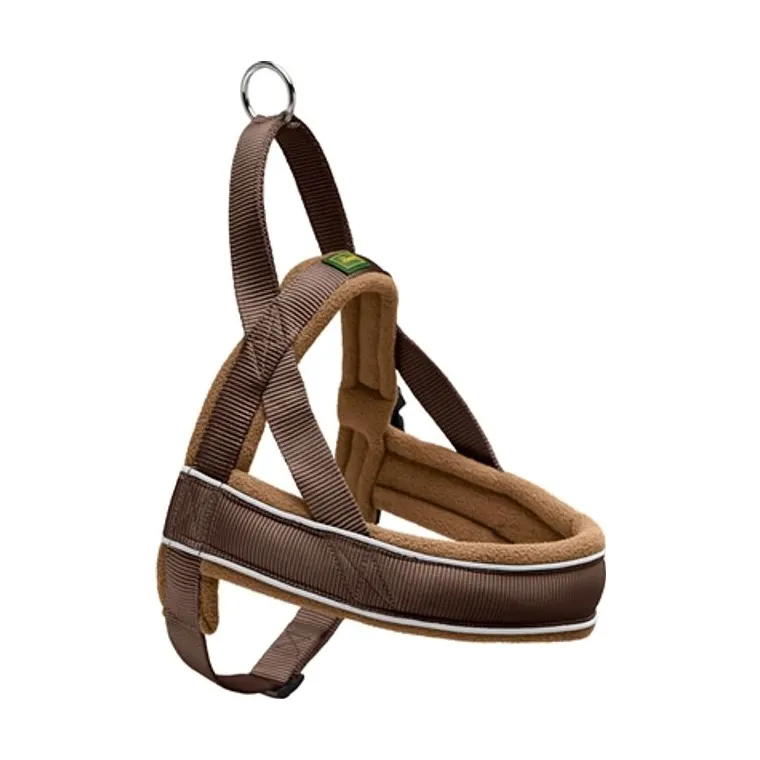
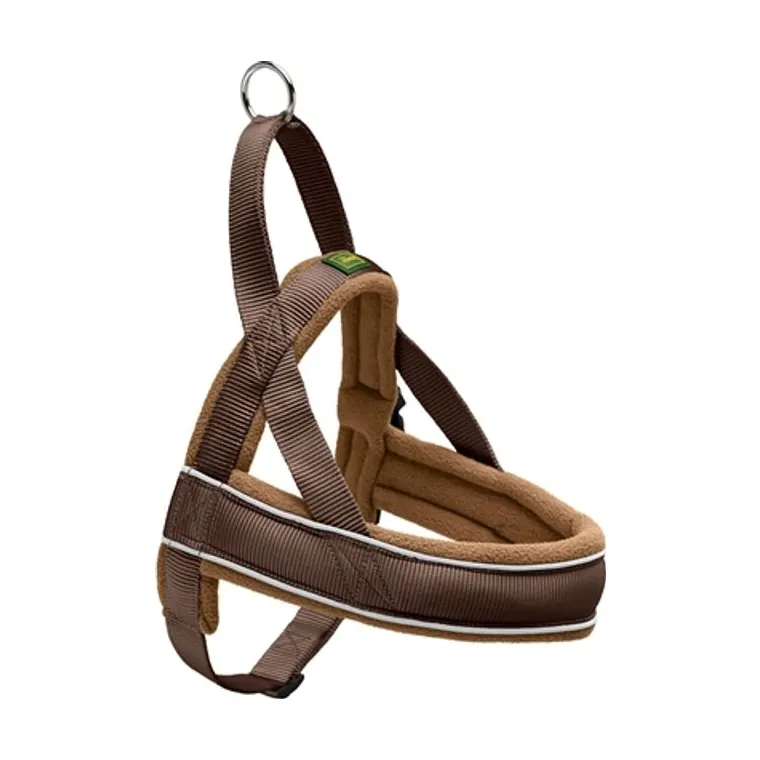
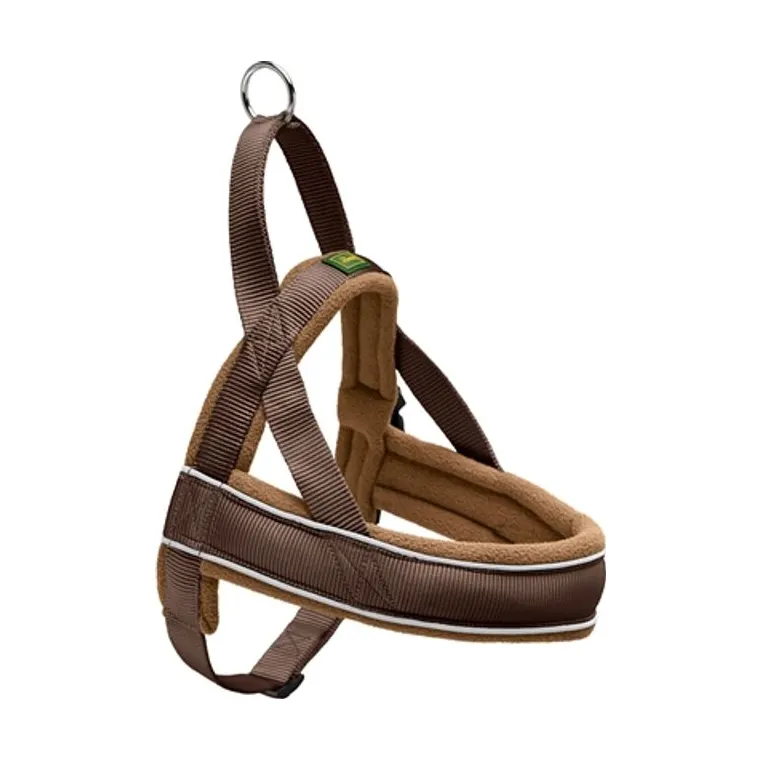
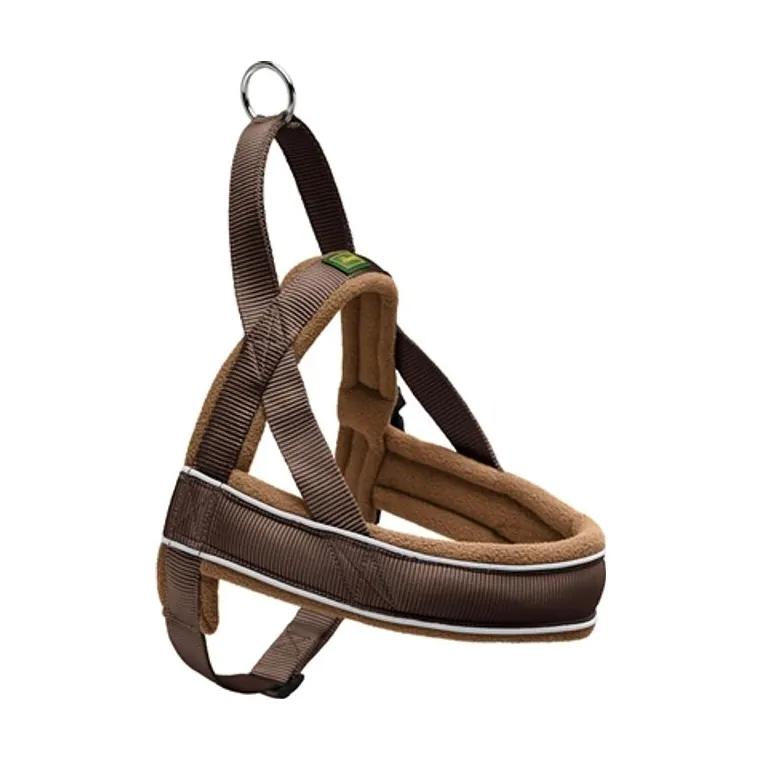
Hunter Norwegian dog harness nylon, brown/cognac, L, 62-75 x 2.5 cm
In stock · 1 to 2 working days (NL) or 2 to 7 (EU)Buy 2: 5% off · 3 or more: 10% off€ 40.25
A harness only works when it fits. Too loose and your dog slips out at the worst moment; too tight and it chafes behind the legs. Here is how to measure, choose and check the fit, in ten minutes.
A collar puts every tug on your dog's throat. For dogs that pull, lunge at squirrels or dart after bikes, that pressure lands on the trachea walk after walk: which is why trainers overwhelmingly point pullers toward a harness. A harness spreads the same force across the chest and shoulders, where the body can carry it comfortably. That doesn't make collars useless: they're the right place for an ID tag, and calm walkers do fine on them. But if your walks involve any real pulling, a well-fitted harness is kinder on the dog and gives you more control, because you're steering the chest: the dog's centre of mass: instead of the neck.
Two measurements decide everything: the girth (the widest part of the ribcage, just behind the front legs) and the neck at its base, where a harness actually sits: lower and wider than where a collar goes. Use a soft measuring tape, or a piece of string you lay along a ruler, and let two fingers slip under the tape while you measure. That two-finger slack is the fit you want in the harness itself. Always buy on measurements, never on 'small/medium/large' alone: sizing differs wildly between makers, and a 'medium' can span three kilos of difference. If your dog sits between sizes, size up on the girth and use the adjusters: straps can shorten, but a too-small harness can't grow. The Outdoor Dog Harness runs adjustable at both neck and chest, which is exactly what between-size dogs need.
A Y-front harness (the strap runs down the breastbone, splitting around the shoulders like a Y) leaves the shoulders free to move naturally: the best default for everyday walks, hikes and running. A step-in suits dogs who hate things going over their head: lay it flat, front paws in, clip on the back. And a front-clip 'no-pull' attaches the leash at the chest, so a pulling dog gets turned gently sideways instead of winning a tug-of-war: a training aid, not a punishment. For runners, a hands-free setup changes the game: a leash around your waist with a bungee section absorbs the shocks that would otherwise yank your shoulder, and it keeps your arms free for a natural stride. The Reflective Hands-Free Running Leash Set pairs a waist belt with a shock-absorbing lead and reflective stitching for early-morning or late-evening runs.
Once the harness is on, run this check: (1) two fingers fit flat under every strap: no more, no less; (2) the chest plate sits on the breastbone, not the throat; (3) the girth strap sits a hand-width behind the front legs: right against the armpit it will chafe; (4) your dog can freely reach a full stride with the front legs; (5) grab the back handle or D-ring and lift gently: the harness should hold without rotating or riding up over the head. Re-check monthly for puppies (they grow through settings fast) and after every wash, since straps can slip. And restock the boring essentials while you're at it: a walking pouch keeps treats and poop bags on your hip instead of in a coat pocket you forgot, which makes reward-based training dramatically more consistent.
Measure the chest girth just behind the front legs and the neck at its base, then buy from the maker's size chart on those numbers: never on S/M/L alone. Leave two fingers of slack under every strap, and if your dog is between sizes, take the larger one and tighten the adjusters.
For any dog that pulls, yes: a harness spreads force across the chest instead of the throat. Keep a collar for the ID tag, and walk on the harness. Calm, leash-trained dogs can walk fine on either.
A harness with the leash ring on the chest instead of the back. When the dog pulls, the geometry turns them gently sideways rather than letting them lean their full weight forward. It is a training aid: pair it with reward-based training for lasting results.
Snug enough that it cannot rotate or slip over the head, loose enough that two fingers slide flat under every strap. Check that the girth strap sits a hand-width behind the front legs so it cannot chafe the armpit.