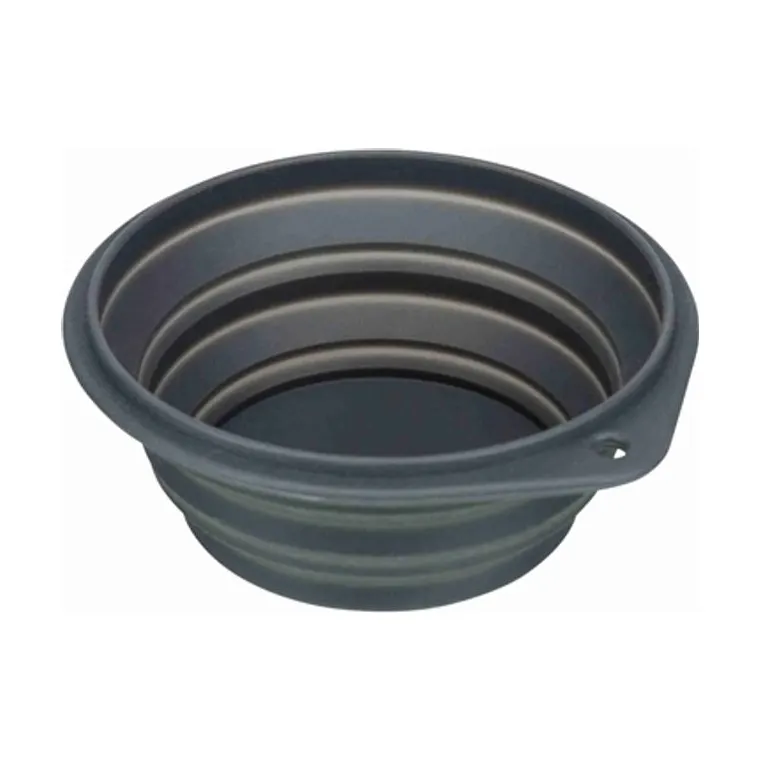
Trixie
Trixie silicone travel food/water bowl, assorted, 500 ml 14 cm
In stock · 1 to 2 working days (NL) or 2 to 7 (EU)Buy 2: 5% off · 3 or more: 10% off€ 4.49
13 July 2026 · Seasonal
A large UK veterinary study found that exercise, not hot cars, triggers most heat-related illness in dogs. Here is what the numbers say about summer walks, pavements and parked cars, and the simple checks that keep July safe.
The awareness campaigns focus on parked cars, but the veterinary data points somewhere else first. A study led by researchers using the Royal Veterinary College's VetCompass programme reviewed the records of 905,543 UK dogs under primary veterinary care in 2016 and identified 1,259 heat-related illness events. Of those, 74.2% were triggered by exertion, meaning exercise such as walking, running or playing, while 12.9% were environmental (hot weather or hot buildings) and 5.2% followed confinement in a vehicle. The study's title says it plainly: dogs don't die just in hot cars. The practical takeaway for July is that the biggest lever owners control is the walk itself: its timing, its length and its intensity on hot days.
Air temperature is only half the story on summer walks; asphalt in full sun holds heat long after the air feels bearable, and paw pads burn on surfaces hands would not tolerate. The RSPCA's summer guidance offers a check that requires no equipment: if the ground is too hot to touch with your hand for five seconds, it is too hot for paws. The charity also advises walking in the early morning or late evening when it is cooler, and watching for the signs of pad damage afterwards: limping, excessive licking of the feet, or visibly damaged pads. On genuinely hot days, the confident move is the boring one: a shorter, slower, shadier walk on grass, or shifting the main outing to the coolest hours entirely.
The car statistics being a smaller share of heatstroke cases does not make parked cars safe; it makes them a hazard most owners have already learned to avoid, and the physics remain brutal. According to the RSPCA, when it is 22°C outside, the temperature inside a car can reach 47°C within an hour, a level that can be fatal to a dog. That maths turns a quick errand into an emergency on an ordinary warm day, not just during a heatwave. The rule that follows is absolute rather than situational: the dog either comes with you or stays home, and a partly opened window changes nothing worth relying on.
The VetCompass study also mapped who gets into trouble. Brachycephalic (flat-faced) dogs had greater odds of all three types of heat-related illness compared with dogs of medium skull length; young male dogs had greater odds of the exertional form, fitting the profile of enthusiastic dogs run hard in warm weather; and older dogs and dogs with respiratory compromise had the greatest odds of the environmental form. If your dog is flat-faced, senior, overweight or has breathing trouble, its safe summer window is simply narrower, and its exercise should shrink accordingly on warm days. Any dog that seems distressed in heat, panting heavily, drooling, wobbling or collapsing, needs a vet immediately. This article is general guidance, not veterinary advice.
None of this requires gadgets; it requires water, timing and a little restraint. Carry water on any warm walk beyond the short and shady, and offer it at every pause rather than waiting for the destination: a fold-flat travel bowl in a pocket or pack removes the only excuse. Shift walks to early morning and late evening, favour grass and shade over sun-baked pavement, and keep a treat pouch stocked so training and recall stay sharp even on short, slow heat-adjusted outings. The dogs that sail through summer are rarely the ones with special equipment; they are the ones whose humans adjusted the routine before the hottest week arrived.
There is no single safe number, because humidity, surface heat and the individual dog all matter. Use the RSPCA's five-second test: if the ground is too hot for your hand for five seconds, it is too hot for paws. On hot days, walk in the early morning or late evening, keep it shorter and slower, and give flat-faced, older or unwell dogs an extra margin.
No. In a large UK study of veterinary records, 74.2% of heat-related illness events in dogs were triggered by exercise, against 5.2% linked to being confined in a vehicle. Hot cars remain genuinely dangerous, but most cases start on walks, runs and play sessions in warm weather.
The study found flat-faced (brachycephalic) breeds had greater odds of every form of heat-related illness, while older dogs and dogs with breathing problems were most at risk from hot environments. Young, energetic dogs are overrepresented in exercise-triggered cases, so enthusiasm is not protection either.