How to stop your cat scratching the furniture
Your cat isn't destroying the couch out of spite — scratching is how cats mark territory, stretch their spine and shed old claw sheaths. You can't train it away, but you can redirect it. Here's the method that actually works.
At a glance
| Product | Best for | Price | Warranty |
|---|---|---|---|
| Magic Organ Foldable Cat Scratcher Board | Real supplier stock — ships in 8–15 days | € 13.95 | 2 years |
| Multi-Storey Cat Tree Tower with Scratch Posts | Real supplier stock — ships in 8–15 days | € 108.95 | 2 years |
| Wobble Ball Cat Scratcher on Stand | Real supplier stock — ships in 8–15 days | € 12.95 | 2 years |
| Kitty Kurls Magnetic Scratcher Toy (2-Pack) | Real supplier stock — ships in 8–15 days | € 14.95 | 2 years |
Why cats scratch (and why punishment backfires)
Scratching is hard-wired: it deposits scent from glands in the paws, peels worn outer layers off the claws, and gives the spine and shoulders a full stretch. A cat that can't scratch anywhere will be stressed — and a stressed cat scratches more, not less. That's why yelling, spray bottles and sticky tape tend to move the problem to a new spot rather than solve it. The working strategy is substitution: give the cat a scratching surface it likes more than your sofa, put it in the right place, and make the sofa less rewarding in the meantime. Cats choose scratchers by texture, stability and location — get those three right and the couch loses its appeal on its own.
The placement trick nobody uses
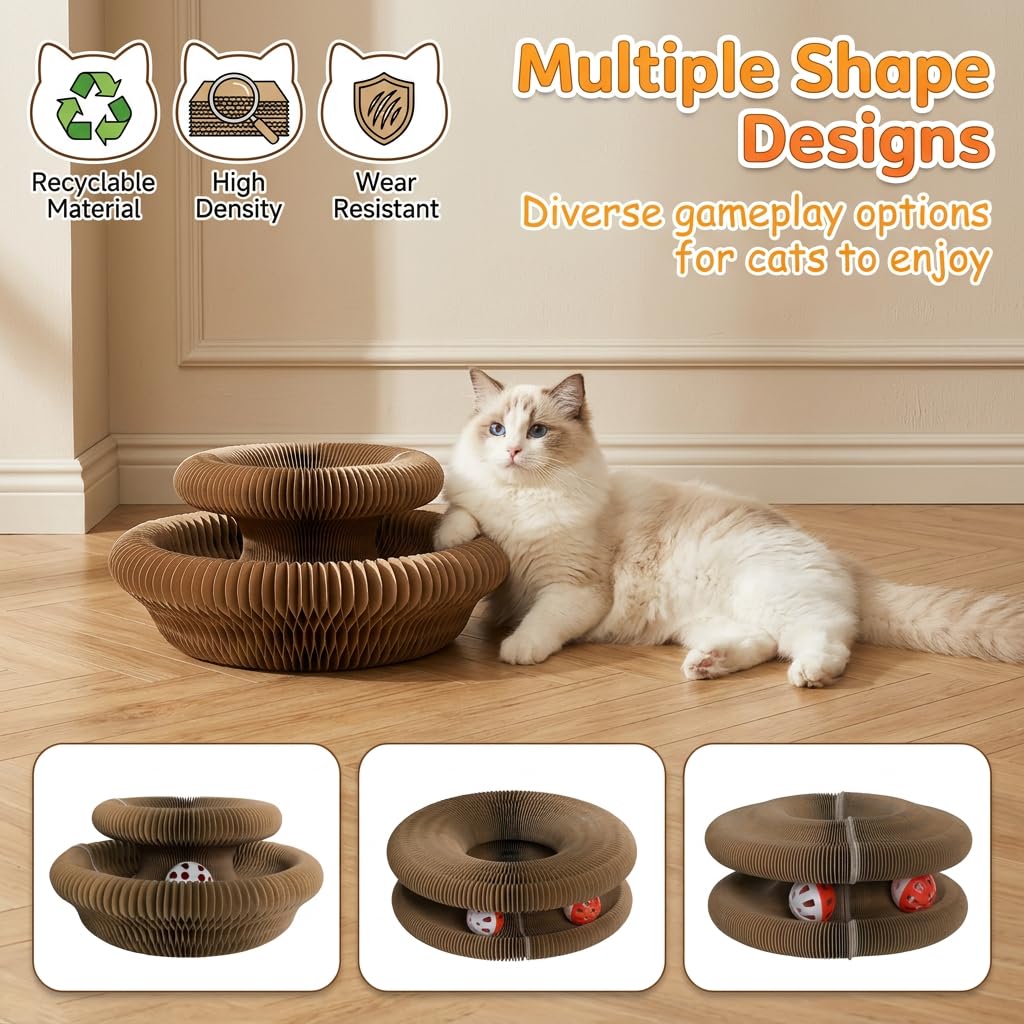
Here's the counterintuitive part: put the scratcher right next to the furniture your cat already scratches — not in a far corner where it looks tidier. Your cat chose that couch corner because it's territory worth marking, usually along a walking route or near a sleeping spot. A scratcher parked there intercepts the habit; a scratcher hidden by the bookcase doesn't compete. Cats also scratch right after waking, so a second scratcher near the sleeping spot catches the morning stretch. Once the new surface has won — give it two to four weeks of consistent use — you can slide it toward a spot you prefer, half a metre every few days. A foldable board like the Magic Organ Cat Scratcher is easy to move around during exactly this phase.
Vertical, horizontal or both: read your cat
Look at the damage pattern. Shredded couch corners and door frames at shoulder height mean a vertical scratcher: it must be tall enough for a full-body stretch and heavy enough not to wobble — a wobbling post gets abandoned instantly, which is why a cat tree with proper scratch posts beats a flimsy standalone pole. Carpet and doormat damage means a horizontal scratcher, flat on the floor. Many cats want both, and combination pieces earn their keep: the Wobble Ball Scratcher pairs a scratch surface with a play element, so the scratching spot doubles as an activity zone — helpful for young cats that scratch out of boredom as much as instinct.

Multi-Storey Cat Tree Tower with Scratch Posts
Real supplier stock — ships in 8–15 days
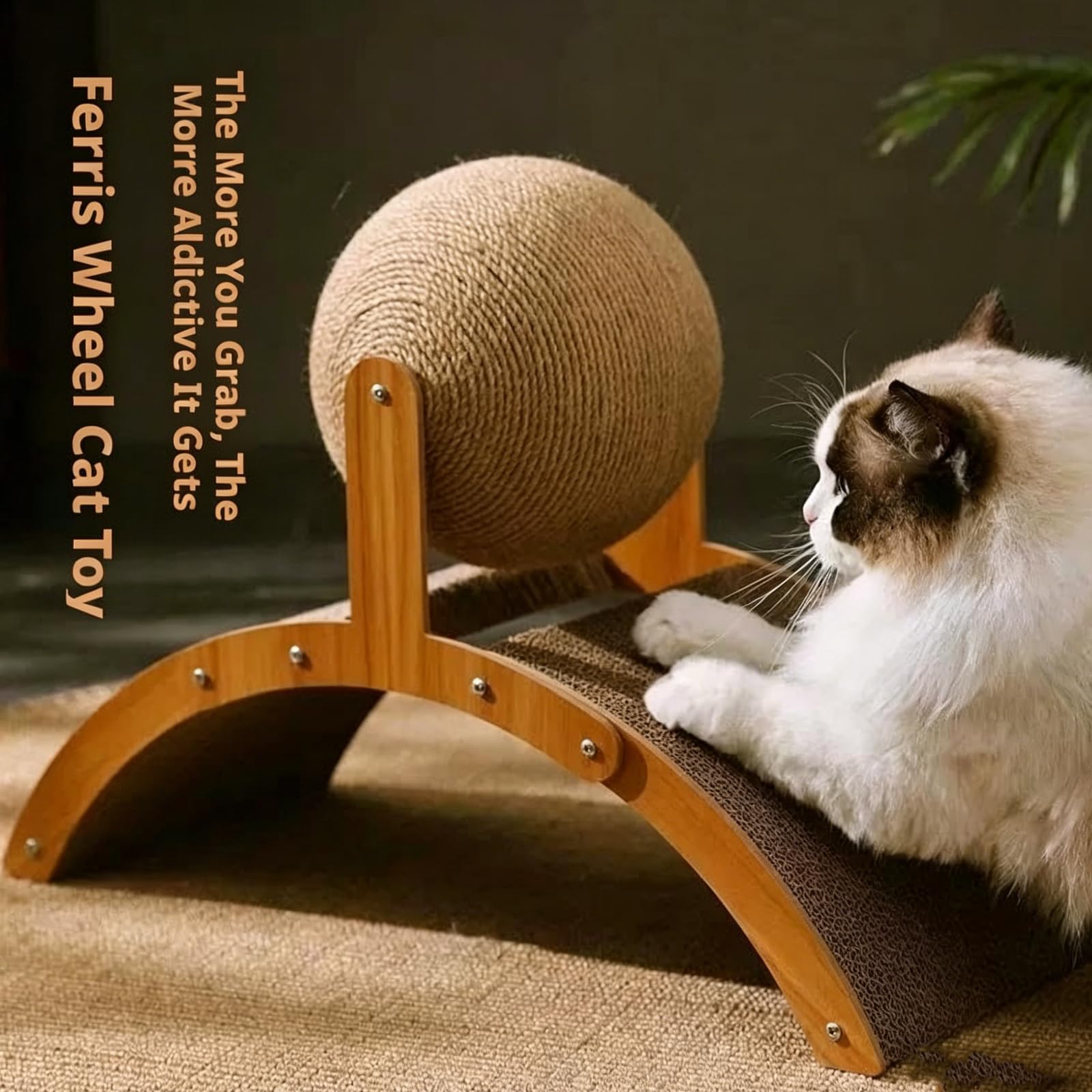
Wobble Ball Cat Scratcher on Stand
Real supplier stock — ships in 8–15 days
Make the couch boring, make the scratcher rewarding
While the new scratcher settles in, tilt the odds. Cover the attacked couch corner with a throw blanket or double-sided tape (cats dislike the texture) and park the scratcher within a body-length of it. Reward every use you see — a treat, praise, play — and rub a little catnip or silvervine into new scratchers to speed up adoption. Keep claws maintained too: a trimmed claw does less damage during the transition, and interactive scratch toys like the Kitty Kurls give a bored cat somewhere else to work its paws. What you should never do is declaw — it's an amputation, illegal in much of the EU, and it trades furniture damage for chronic pain and behavioural problems. Redirection works; give it the two-to-four weeks it needs.

FAQ
Why does my cat scratch the couch and not the scratcher?
Usually placement or stability: the couch is on a walking route and never wobbles. Put a stable scratcher directly next to the damaged spot, make the couch corner unattractive with a throw or double-sided tape, and reward every use of the scratcher.
Where should I put a cat scratcher?
Next to the furniture being scratched, near the sleeping spot (cats scratch after waking), or along the cat's main walking route. A scratcher in a quiet corner nobody passes will be ignored.
Do scratching posts need to be tall?
Vertical posts should let the cat stretch to full body length — for an adult cat that means roughly 60 cm of usable height or more — and must not wobble. For floor-scratchers, length matters more than height.
Does catnip help with a new scratcher?
Often, yes. Rubbing catnip or silvervine into a new scratch surface draws the cat in and speeds up adoption. Not all cats respond to catnip; silvervine works on a larger share of cats.