Making home comfortable for a senior dog or cat
Senior pets don't need a new home, they need a lower one: steps to the bed and sofa instead of jumps, bowls raised to a comfortable height, grip on smooth floors and a warm draught-free bed. Small changes remove daily friction and often bring back habits you thought were gone.
At a glance
| Product | Best for | Price | Warranty |
|---|---|---|---|
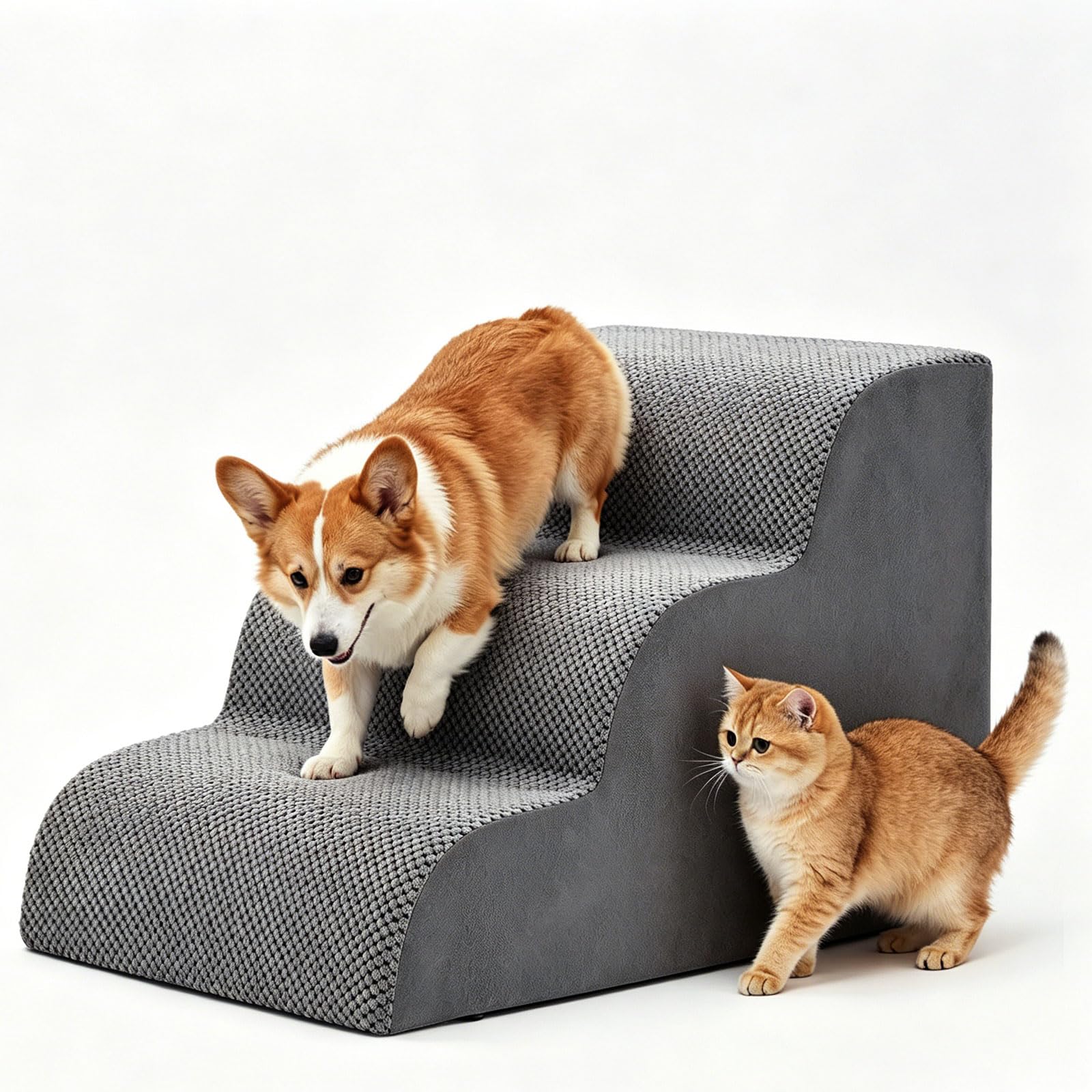
| 3-Step Dog Stairs for Small Dogs & Cats | Real supplier stock — ships in 8–15 days | € 49.95 | 2 years |
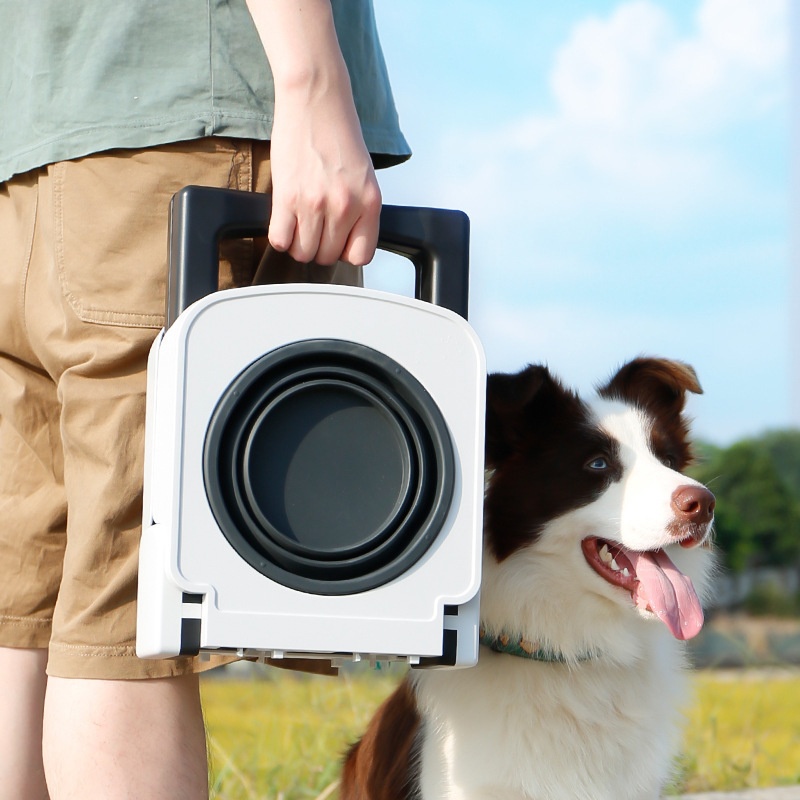
| Folding Double Dog Bowl, Elevated & Adjustable | Real supplier stock — ships in 8–15 days | € 39.95 | 2 years |
Aging shows up at home first
Long before anything appears on a vet's chart, age shows up as edited behaviour: the cat stops appearing on the windowsill, the dog waits at the car boot instead of jumping in, the evening stairs get slower, the greeting at the door loses its vertical component. Animals are stoics; they rarely complain, they just quietly stop doing what hurts. Treat those edits as information. Mention them at the next vet visit, because gradual stiffness is worth a professional eye, and this guide is general guidance, not veterinary advice. But whatever the vet finds, the home side of the answer is the same: reduce the number of times per day the animal has to do something that costs it, starting with the jumps.
Cut the jumps first
Jumping down is the expensive part: the landing sends the animal's weight through front legs that have been absorbing impacts for a decade. Beds, sofas, windowsills and car boots are the four usual launch sites, and every one of them can be fitted with a gentler route. Steps suit most seniors; a ramp suits the very stiff and the long-backed. The 3-Step Dog Stairs work for small dogs and cats alike at the bed and sofa, and the training is short: reward each step, then block the old shortcut for a few weeks. The payoff is often visible fast, and not only physically. A senior cat that can reach the windowsill again, or a dog that reclaims its spot on the bed, gets a piece of its territory back, and that shows in mood as much as movement.
Mealtimes at a kinder height
Watch an older dog eat from a bowl on the floor: the neck drops, the front legs splay slightly, and the whole posture is a small negotiation. Raising food and water to somewhere between wrist and elbow height removes that daily fold, and stiff-necked seniors often eat visibly more comfortably within a day of the change. For deep-chested breeds, ask your vet about the right setup for your dog specifically. Stability matters as much as height: a bowl that skates away from a careful old eater is a daily annoyance. The Folding Double Dog Bowl adjusts in height, keeps food and water side by side, and stays put, which covers all three requirements in one station. Keep water on every floor of the house too; stairs are exactly the trip a stiff animal will skip.
Floors, beds and warmth
Smooth floors that were never a problem become one when the push-off weakens: paws slide, confidence drops, and some seniors start avoiding whole rooms. Runners and rugs along the main routes, from bed to bowl to door, give traction back cheaply. Keeping claw tips trimmed and the fur between paw pads short helps grip too. Then look at where the animal sleeps. Old joints ask for a thicker, supportive bed placed out of draughts and away from cold floors, warm in winter without being parked against a radiator. Cats shift their preferred spots with the seasons more than dogs do, so offer a senior cat a couple of warm, low-entry options and let it choose. A hot water bottle under a blanket on cold nights is old technology that still wins.
Keep the routine, shrink the intensity
Seniors thrive on the same schedule they always had, at a gentler dose. For dogs, several short walks beat one long march, sniffing time becomes the main event rather than the interruption, and swimming or slow hill walking keeps muscles working without impact. For cats, play still matters: shorter, lower, slower wand games that end in an easy catch keep the hunter employed without asking for vertical heroics. Mental work ages beautifully even as joints do not. Food puzzles, scent games, new routes at old speeds: a slow body does not mean a bored mind, and an employed mind is calmer at 3 a.m. than an idle one. The goal of all of it is the same: keep the good days ordinary and the ordinary days good.
FAQ
At what age is a dog or cat considered senior?
Roughly the last third of expected lifespan: around seven to eight years for cats and large dogs, closer to ten for small dogs, but individuals vary widely. Behaviour is a better signal than the calendar; when jumping, stairs or grooming visibly change, treat the animal as a senior and adjust the home.
Should an arthritic dog use stairs or a ramp?
For a diagnosed condition, follow your vet's advice for your specific dog. As a general pattern, mildly stiff dogs manage steps well, while very stiff or long-backed dogs do better on a gentle ramp because it removes the bending entirely. Whichever you choose, stability and grip decide whether the dog trusts it.
Why has my old cat stopped jumping on the windowsill?
Often because the jump has become uncomfortable, and cats quietly retire moves that hurt rather than showing pain. Provide steps or a stable piece of furniture as a staircase and mention the change to your vet, since gradual stiffness in older cats is common and worth checking.