How to choose a cat tree your cat will actually use
A good cat tree is stable before it is tall, has a perch higher than your furniture, sits near a window or in the room where you live, and includes scratch posts long enough for a full-body stretch. Get those four things right and the tree becomes your cat's favourite address.
At a glance
| Product | Best for | Price | Warranty |
|---|---|---|---|
| Multi-Storey Cat Tree Tower with Scratch Posts | Real supplier stock — ships in 8–15 days | € 108.95 | 2 years |
| Wobble Ball Cat Scratcher on Stand | Real supplier stock — ships in 8–15 days | € 12.95 | 2 years |
Why a tree earns its floor space
A cat tree is not a toy; it is territory. Cats measure a home in three dimensions and rank resting spots by height and view, because elevation is where a cat can finally switch off: nothing can approach unseen from up there. In a home without legal height, cats appoint their own, which is how wardrobes, bookshelves and kitchen counters get colonised. One well placed tree solves several problems in a single footprint: an elevated perch to rest on, a lookout over the room or street, scratch posts on the way up, and a refuge from visitors, children or the other cat. That density of function is why a tree beats a scatter of small toys for an indoor cat, and why it is worth choosing carefully instead of grabbing the cheapest one.
Stability beats height
The fastest way to waste money on a cat tree is to buy a tall, light one. A tree that sways when the cat lands gets abandoned within days, because shaky ground defeats the entire point of a safe lookout. Check the base first: it should be wide, heavy and solid, with the weight low. Then check that platforms are broad enough for a full flop, not just a crouch. Height still matters, but as a relative measure: the top perch should comfortably beat the back of your sofa and ideally give a line of sight out of a window. The Multi-Storey Cat Tree stacks its levels on a proper base with sisal posts up the spine, which covers the checklist in one piece of furniture.

The features cats use, and the ones they ignore
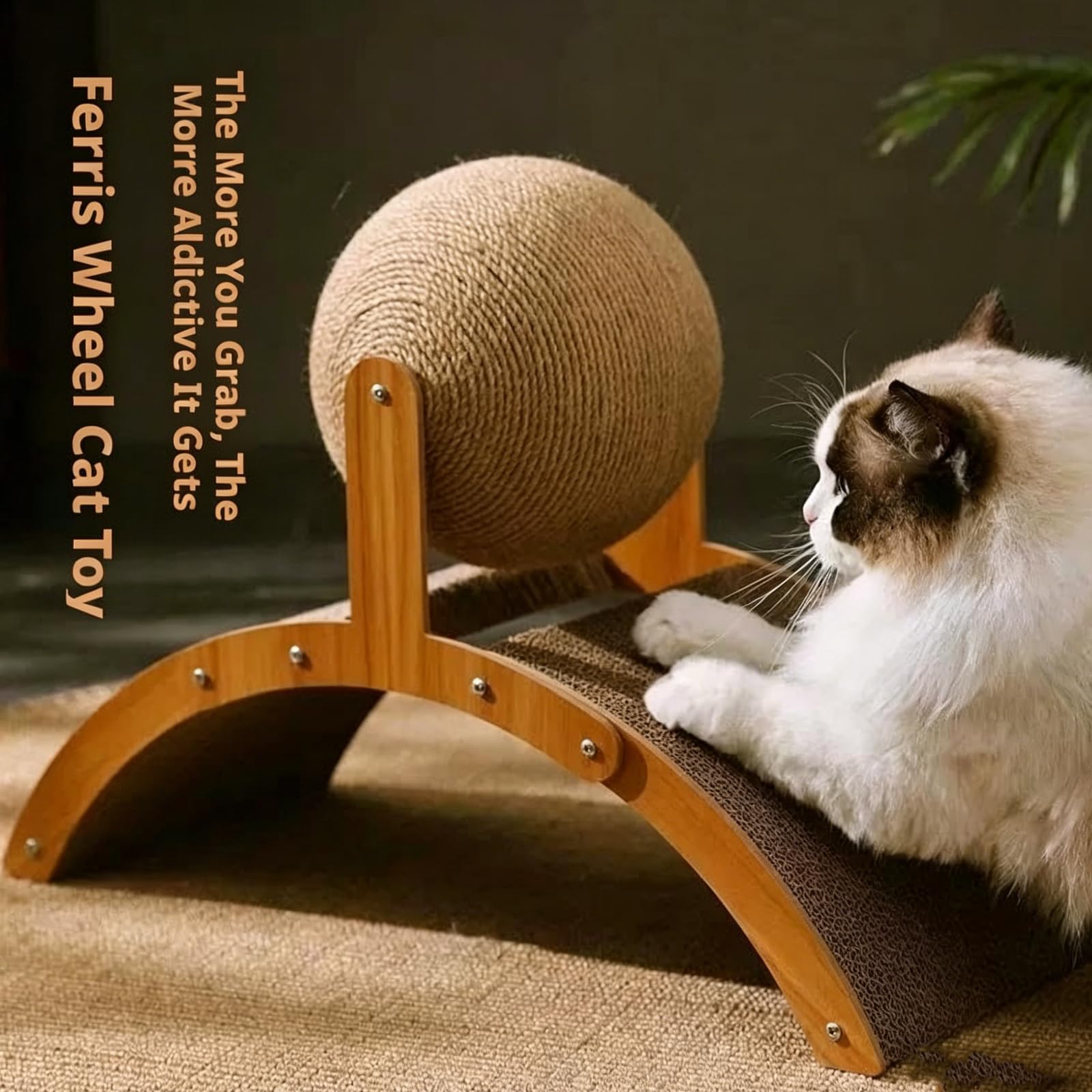
Cats reliably use: perches at different heights, a scratch post that is long enough for a full vertical stretch, an enclosed box or cave if they are the hiding type, and any platform beside glass. Cats reliably ignore: dangling pom-poms after week one, and any surface too small to sleep on properly. Judge a tree by its skeleton, not its accessories. Sisal-wrapped posts thick enough to take a full-weight scratch are a genuine two-for-one, because a cat that scratches its tree on the way up is a cat with less interest in your couch corner. If your cat already loves horizontal scratching, park a board like the Wobble Ball Scratcher at the foot of the tree and the whole corner becomes one activity zone.
Placement: the window trick
Location decides how much a tree gets used. The classic mistake is buying a beautiful tree and parking it in the spare room; cats want height where the life is, not exile with a view of a wall. Put the tree in the living room, or wherever the household actually gathers, and if you can, against a window with street, garden or bird traffic. That single decision turns a static object into daily entertainment. Mind the microclimate too: a spot clear of radiators, not in a draught, and far enough from shelving that an ambitious cat cannot use the top perch as a launchpad to somewhere you would rather they were not. Expect a settling-in week; a new tree smells of nothing, and cats trust nothing that smells of nothing. A little catnip on the posts speeds up the introduction.
Small flats and multiple cats
In a small flat, go vertical and narrow rather than short and wide: floor space is what you lack, and height is what the cat wants anyway. A tall, stable tower in the right corner adds more usable cat territory than any amount of floor-level clutter, and it concentrates scratching, resting and watching in one place you can actually live around. With more than one cat, count perches, not trees. Two cats can share a tree happily as long as nobody has to share a platform; top spots are status, and a shortage creates friction. One tree with several distinct levels usually works, but if one cat guards it, a second cheaper perch elsewhere in the room dissolves the standoff.
FAQ
How tall should a cat tree be?
Taller than your surrounding furniture, so the top perch is genuinely the best seat in the room, and tall enough that the scratch posts allow a full vertical stretch. Beyond that, stability matters far more than raw height: a shorter tree that never wobbles beats a tall one that sways.
Where is the best place to put a cat tree?
In the room where the household spends its time, ideally beside a window with something moving outside. A tree in an unused room will be an unused tree. Keep it out of draughts and away from radiators, and give the cat a week to adopt it.
Can two cats share one cat tree?
Usually, if the tree has several proper platforms so nobody has to share a perch. Top spots carry status, so a shortage of levels can cause guarding. If one cat monopolises the tree, add a second elevated spot elsewhere rather than a bigger tree.